
How to choose a water softener
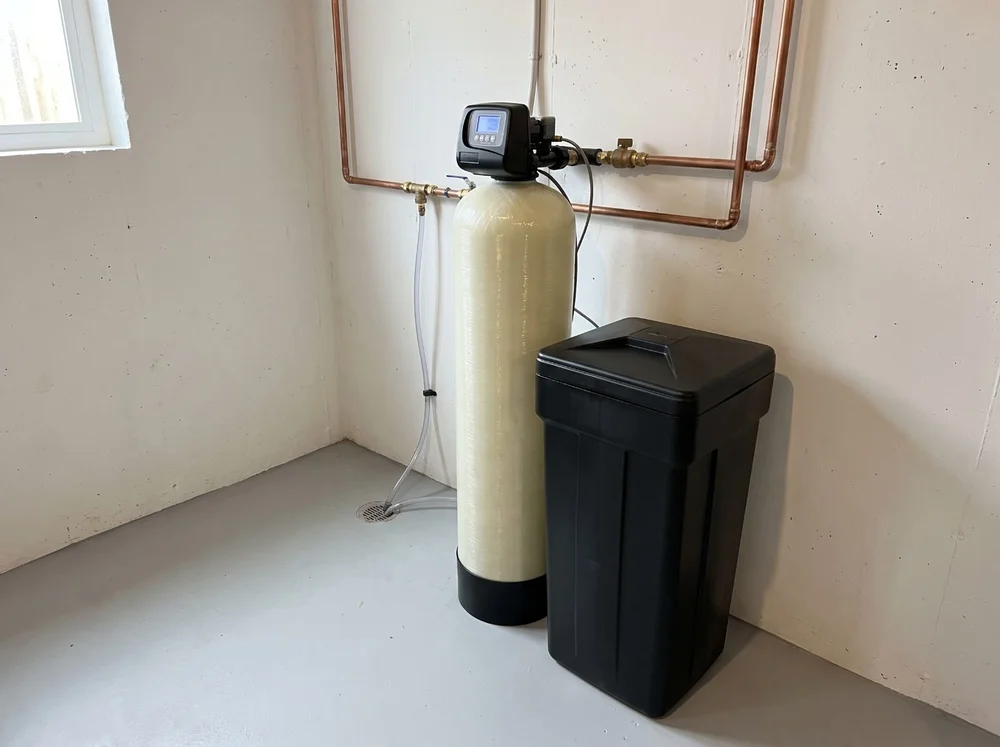
The right softener is sized to your hardness and household, has a metered valve, and has any iron or chlorine handled before it. Get those right and a softener runs for years on a bag or two of salt a month. Here's how to choose, step by step.
Not sure what you need? Get your free water report in seconds →
Know your hardness
Penn State Extension's hardness scale. One grain per gallon is about 17 mg/L.
| Hardness | Grains per gallon | mg/L |
|---|---|---|
| Soft | under 1 | under 17 |
| Slightly hard | 1 to 3.5 | 17 to 60 |
| Moderately hard | 3.5 to 7 | 60 to 120 |
| Hard | 7 to 10.5 | 120 to 180 |
| Very hard | over 10.5 | over 180 |
Penn State notes that below 7 grains per gallon, water probably won't cause major scaling. On city water, your supplier's annual report may list hardness; in parts of Berks County it's very hard. Hardness by local supplier →
Step 2: Check what else is in the water
A softener is built for calcium and magnesium. Penn State Extension says softeners are generally recommended when:
pH is above 6.7. Acidic water needs a neutralizer first. Acidic water →
Hardness is 3 to 20 grains per gallon. Outside that range, a softener is either unnecessary or needs help.
Dissolved iron is under 5 mg/L. More iron, or any manganese, calls for a filter ahead of the softener. Manganese →
City water has chlorine or chloramine. A carbon stage ahead of the softener protects the resin.
Step 3: Size it
Daily softening need = people × gallons per person per day × grains per gallon.
| Household | Hardness | Grains a day |
|---|---|---|
| 2 people | 10 gpg | about 1,500 |
| 4 people | 15 gpg | about 4,500 |
| 5 people | 20 gpg | about 7,500 |
Assumes about 75 gallons per person per day. Your actual use varies.
A softener should go several days between regenerations. Too small and it regenerates constantly; too big and the resin can sit unused. We install a 48,000-grain softener in most homes and set it to your test results.
Features that matter
Metered (demand) valve. Penn State says timed models waste more water and salt because they regenerate whether the resin needs it or not.
Bypass valve. Lets you shut off the softener for outdoor water or service without cutting water to the house.
A settings record. Hardness, salt dose and reserve should match your test. Wrong settings either waste salt or leave hard water.
Septic-friendly regeneration. Penn State estimates about 50 gallons per regeneration; regenerating only when needed keeps that down.
Sodium. Softening adds 7.5 mg of sodium per quart for each grain removed (Penn State). Potassium chloride or a reverse osmosis faucet are options.
Compare installed prices
A fair comparison includes installation by a licensed plumber, fittings, a bypass and startup.
| System | Price, installed | With financing* |
|---|---|---|
| Water softener (48,000-grain, metered valve) | $2,295 | about $49/mo |
| Water softener, upgraded control valve | $2,695 | about $57/mo |
| City Essential: carbon + softener combo tank + tankless RO | $3,295 | about $70/mo |
| City Premium: carbon filter + softener + tankless RO | $4,495 | about $95/mo |
| Iron filter + water softener (well) | $5,190 | about $110/mo |
*60 months at 9.99% APR, subject to credit approval. Prices installed, as of October 2026.
Full softener price guide → · Softener vs salt-free conditioner →
How it works
Request your instant free quote
Fill out the free quote form or call (610) 400-3132. Tell us your address and whether you're on city water or a well.
We quote you on the spot
You get a clear price for your system right then, starting from a base package at a set price.
A free water test confirms your setup
Before we install, we test your actual water for free so you only pay for the treatment your water needs.
We install your system
We install it cleanly, show you how it works, and let you know when filters and service are due.
Choosing a water softener: common questions
What size water softener do I need?
Multiply your household's daily water use by your hardness in grains per gallon. For example, 4 people using about 75 gallons each a day with 15 grains of hardness need about 4,500 grains of softening a day. The softener should handle several days of that between regenerations. We size it from your test.
How do I convert mg/L to grains per gallon?
Divide by about 17. One grain per gallon equals about 17 mg/L, so water at 272 mg/L is about 16 grains per gallon.
Metered or timed?
Metered. Penn State Extension says timed models waste more water and salt because they regenerate whether the resin needs it or not. A metered valve regenerates based on the water you actually use.
Can a softener handle iron?
Some. Penn State Extension says softeners are generally recommended only when pH is above 6.7, hardness is 3 to 20 grains per gallon and dissolved iron is under 5 mg/L. Above that, an iron filter goes ahead of the softener.
Do I need a carbon filter with my softener on city water?
It helps. Chlorine breaks down softener resin over time; Purolite says each 1 ppm of chlorine cuts resin life by about half. A carbon stage ahead of the softener protects it.
Is a softener OK with a septic system?
Penn State Extension says each regeneration uses about 50 gallons of water, which may or may not cause hydraulic overload of a septic system. A metered valve that regenerates only when needed keeps that to a minimum.
How much sodium does a softener add?
Penn State Extension says softening adds 7.5 milligrams of sodium per quart for each grain per gallon of hardness removed. Potassium chloride can be used instead of salt, or drink from a reverse osmosis faucet.
What does a softener cost?
A softener installed by Willow Springs is $2,295, or $2,695 with an upgraded control valve. With carbon filtration and reverse osmosis for city water, packages run $3,295 to $4,495.
Written by Sam Beiler, co-founder of Willow Springs Water Company, Sinking Spring, PA. Last updated October 2026.
- Penn State Extension, Water Softening
- Penn State Extension, Iron and Manganese in Private Water Systems
- Nebraska Extension, Hard Water (Calcium and Magnesium) (G1274)
- Purolite, Factors that affect softening resin performance and life
- University of Nebraska-Lincoln Extension, Drinking Water Treatment: Water Softening (G1491)
- Diamond Crystal, Water Softener Salt FAQs