
Hard water in Berks County: how hard is yours?
White crust on faucets, spotty dishes and scale in the water heater all come from hard water. Parts of Berks County have some of the hardest water around: Pennsylvania American Water's Penn District, which serves Sinking Spring, averaged 204 to 360 mg/L in 2025. Here's what we know by supplier, what the numbers mean and how to fix it.
Not sure what you need? Get your free water report in seconds →
How hard is hard?
Penn State Extension's hardness scale. One grain per gallon is about 17 mg/L.
| Hardness | mg/L | Grains per gallon |
|---|---|---|
| Soft | under 17 | under 1 |
| Slightly hard | 17 to 60 | 1 to 3.5 |
| Moderately hard | 60 to 120 | 3.5 to 7 |
| Hard | 120 to 180 | 7 to 10.5 |
| Very hard | over 180 | over 10.5 |
Hardness in local water systems
From each supplier's latest annual water quality report. Your water bill names your supplier.
| Supplier | Hardness | Disinfectant |
|---|---|---|
| Pennsylvania American Water, Penn District (Sinking Spring, much of Spring Twp, Wyomissing Hills) | 204 to 360 mg/L average by entry point (very hard) | Chlorine |
| Western Berks Water Authority (Wyomissing, West Reading, Shillington) | Not listed in the 2025 report | Chloramine |
| Reading Area Water Authority (Reading) | Not listed in the 2025 report | Chlorine |
| Wernersville Municipal Authority | Not listed in the 2025 report | Chlorine |
| City of Lancaster | 235 mg/L (Conestoga plant), 107 mg/L (Susquehanna plant) | Chlorine |
| Private wells, Berks County | Median 61.7 mg/L in Penn State lab samples; varies well to well | None unless you add it |
When a supplier doesn't publish hardness, our free in-home test measures yours in a few minutes.
What hard water does
Scale on faucets, shower glass and inside water heaters, dishwashers and washing machines.
Spots and film on dishes and glassware.
Soap that won't lather, so you use more soap, shampoo and detergent.
Not a health issue. Hardness is about cost and cleaning, not safety.
Why it's hard here
Berks County's comprehensive planning documents describe the valley as limestone and dolomite. Water moving through that rock dissolves calcium and magnesium, the minerals that make water hard. Not every well is hard, though: wells in other rock types can be soft and acidic instead.
Softener prices
| Option | Price, installed | With financing* |
|---|---|---|
| Water softener | $2,295 | about $49/mo |
| City Essential: carbon + softener combo tank + tankless RO | $3,295 | about $70/mo |
| City Premium: carbon filter + softener + tankless RO | $4,495 | about $95/mo |
*60 months at 9.99% APR, subject to credit approval. Prices installed, as of October 2026.
Full details on the water softener cost page.
Hard water: common questions
Is Berks County water hard?
Often. Pennsylvania American Water's Penn District, which serves Sinking Spring and much of Spring Township, averaged 204 to 360 mg/L in 2025, which Penn State Extension calls very hard. Western Berks Water Authority, Reading Area Water Authority and the Wernersville Municipal Authority don't list hardness in their annual reports, so a test is the way to know. Private wells vary: the median Berks sample in Penn State's lab summary was 61.7 mg/L.
What counts as hard water?
Penn State Extension's scale: soft below 17 mg/L (1 grain per gallon), slightly hard 17 to 60, moderately hard 60 to 120, hard 120 to 180 (7 to 10.5 grains), and very hard above 180 mg/L.
Why is the water hard here?
Much of the valley through Berks County sits on limestone and dolomite. Water dissolves calcium and magnesium from that rock, and those minerals are what make water hard.
Is hard water bad for you?
No. Hardness isn't a health concern. It's a cost: scale on fixtures, spots on dishes, and scale inside water heaters and appliances.
How much does a water softener cost?
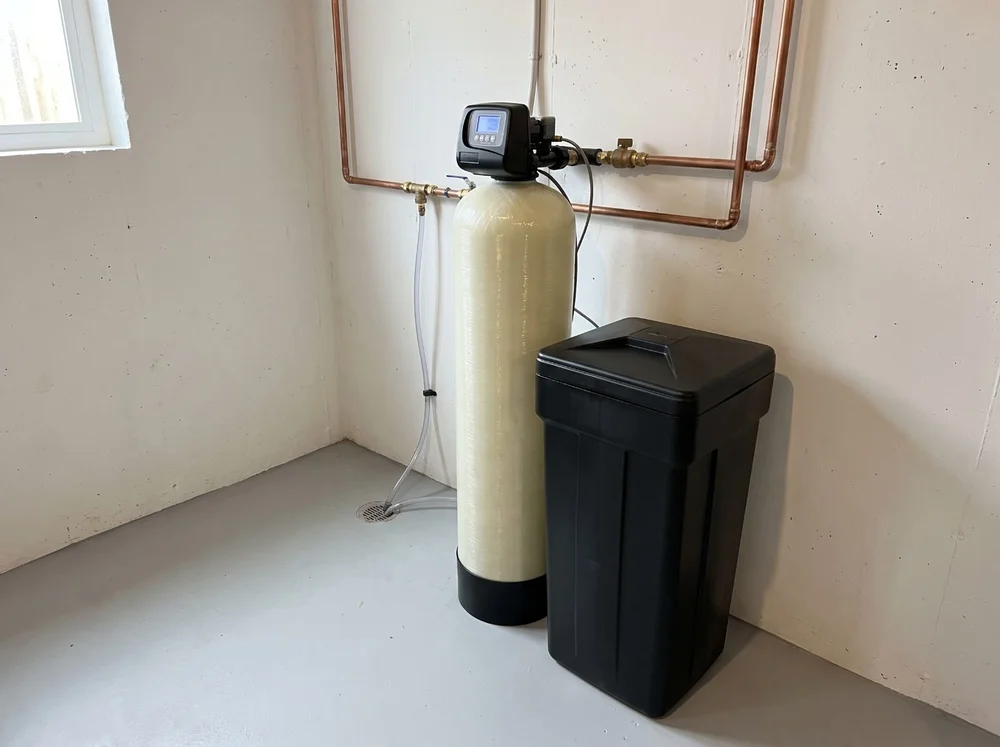
A softener installed by Willow Springs is $2,295, or about $49 a month with approved financing. City water packages that also remove chlorine and add drinking water run $2,895 to $4,495.
Written by Sam Beiler, co-founder of Willow Springs Water Company, Sinking Spring, PA. Last updated October 2026.
- Penn State Extension, Water Softening
- Pennsylvania American Water, 2025 Annual Water Quality Report, Penn District (PWS ID 3060069)
- Western Berks Water Authority, 2025 Annual Drinking Water Quality Report (PWSID 3060066)
- Reading Area Water Authority, 2025 Annual Drinking Water Quality Report
- Wernersville Municipal Authority, 2025 Annual Drinking Water Quality Report
- City of Lancaster, 2025 Yearly Water Analysis
- Penn State Agricultural Analytical Services Lab, Berks County drinking water test summary
- Berks County, Eastern Berks Comprehensive Plan, Ch. III Natural and Cultural Resources
- U.S. Geological Survey, Water hardness FAQ