
Blue-green stains or pinhole leaks? You may have acidic water
Blue-green stains in sinks and tubs, a metallic taste in the morning and small leaks in copper pipes are signs of acidic, corrosive water. Penn State Extension says about 60% of private wells and springs in Pennsylvania have corrosive water, and in Berks County lab samples 76.8% failed the corrosivity index. It's fixable, and it's worth fixing, because corrosive water can pull lead and copper out of your plumbing.
Not sure what you need? Get your free water report in seconds →
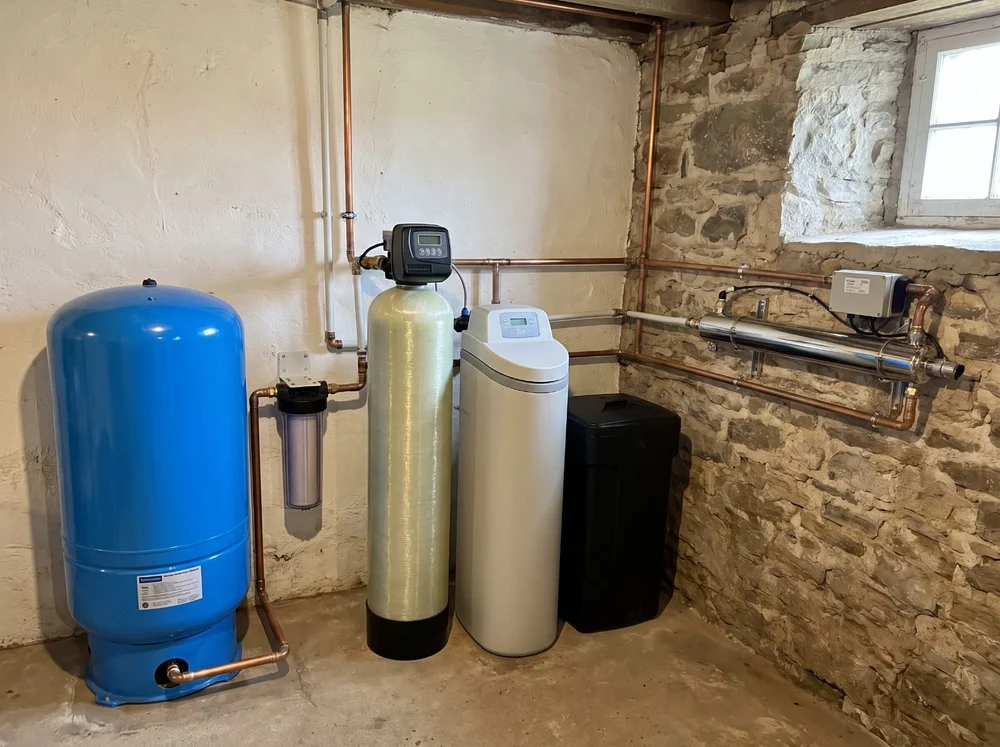
Signs of acidic, corrosive water
Blue-green stains in sinks, tubs and around drains, from dissolved copper.
A metallic or bitter taste, especially in the first water drawn in the morning.
Small leaks in copper pipes and fittings that keep coming back.
Low pH on a test. The EPA's recommended range is 6.5 to 8.5.
How common is it here?
| Berks County water samples (Penn State lab, 2007 to 2025) | Failed the standard |
|---|---|
| Corrosivity index | 76.8% |
| pH | 18.5% |
| First-draw lead | 8.2% |
| Copper | 2.3% |
Source: Penn State Agricultural Analytical Services Lab, Berks County summary. Samples homeowners chose to send in, not a random survey.
Acidic water and lead
Penn State Extension says corrosive water can dissolve lead and copper from pipes, solder and brass fixtures, and that about 20% of Pennsylvania private water systems had dangerous dissolved lead in a recent survey. Lead was banned from plumbing solder in 1991, so older homes are most at risk. Lead has no taste or color; only a certified lab test finds it.
Acid neutralizer or soda ash feed
Penn State Extension describes two ways to raise the pH. Your test results and water use decide which fits.
| Treatment | How it works | Things to know |
|---|---|---|
| Acid-neutralizing filter | Water flows through calcium carbonate (calcite) or magnesium oxide, which dissolves slowly and raises the pH. | Simple and chemical-free. Adds some hardness. The mineral is topped up periodically. $2,295 installed from Willow Springs. |
| Soda ash feed pump | A small pump adds a soda ash solution to the water ahead of the pressure tank. | Doesn't add hardness or reduce pressure, but needs more regular upkeep. Quoted after a water test. |
If the neutralizer pushes your hardness up, a softener afterward fixes that. See well water treatment prices.
How Willow Springs fixes acidic water
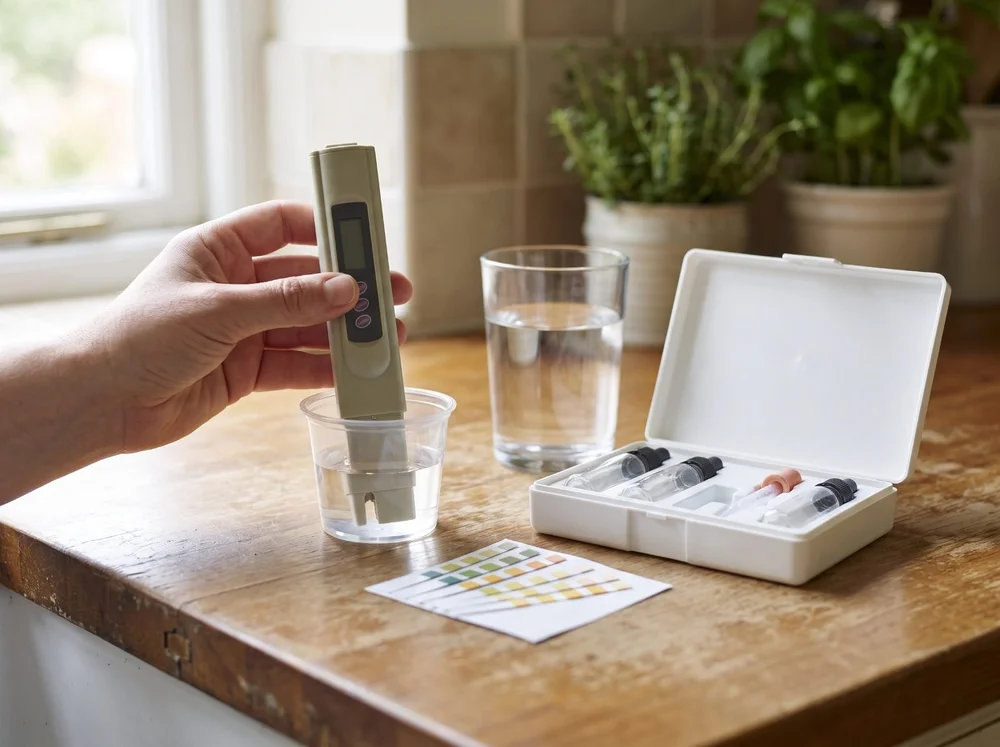
We test pH, hardness, iron and total dissolved solids at your sink for free, and help you arrange a certified lab test for lead and copper. Then we recommend the setup that fits your numbers and give you a clear price.
Acidic well water: common questions
What causes blue-green stains in my sink?
Usually acidic, corrosive water dissolving copper from your pipes. The EPA lists blue-green staining as a sign of copper above its 1.0 mg/L guideline, and Penn State Extension lists bluish-green stains as a classic sign of corrosive water.
What pH is too low?
The EPA's recommended range for drinking water is pH 6.5 to 8.5. Penn State Extension says water that is soft and acidic, below pH 7.0, tends to be more corrosive.
Is acidic well water dangerous?
The acid itself is mainly a plumbing problem, but corrosive water can dissolve lead and copper from pipes, solder and fixtures. Penn State Extension says about 20% of Pennsylvania private water systems had dangerous levels of dissolved lead in a recent survey. A certified lab lead test answers that question for your home.
How common is acidic water in Berks County?
Very. In Penn State's lab summary of Berks County water samples, 76.8% failed the corrosivity index and 18.5% failed for pH. Statewide, Penn State says about 60% of private wells, springs and cisterns have corrosive water.
How do you fix acidic well water?
Penn State Extension describes two options: an acid-neutralizing filter, which runs water through calcium or magnesium minerals to raise the pH, or a soda ash feed pump, which adds a neutralizing solution ahead of the pressure tank. A neutralizing filter installed by Willow Springs is $2,295.
Will a neutralizer make my water hard?
It can. Penn State Extension notes that a calcium-based neutralizing filter increases hardness. If your water is already moderately hard, a softener after the neutralizer may be worth it.
Written by Sam Beiler, co-founder of Willow Springs Water Company, Sinking Spring, PA. Last updated October 2026.