
Coliform or E. coli in your well? Here's what to do
A positive bacteria test is common on Pennsylvania wells. Penn State Extension found coliform bacteria in about 35% of private wells it surveyed, and in Berks County lab samples 40.2% failed for total coliform. You can't see, smell or taste it, so a lab test is the only way to know. Here's what the results mean and how to fix them.
Not sure what you need? Get your free water report in seconds →
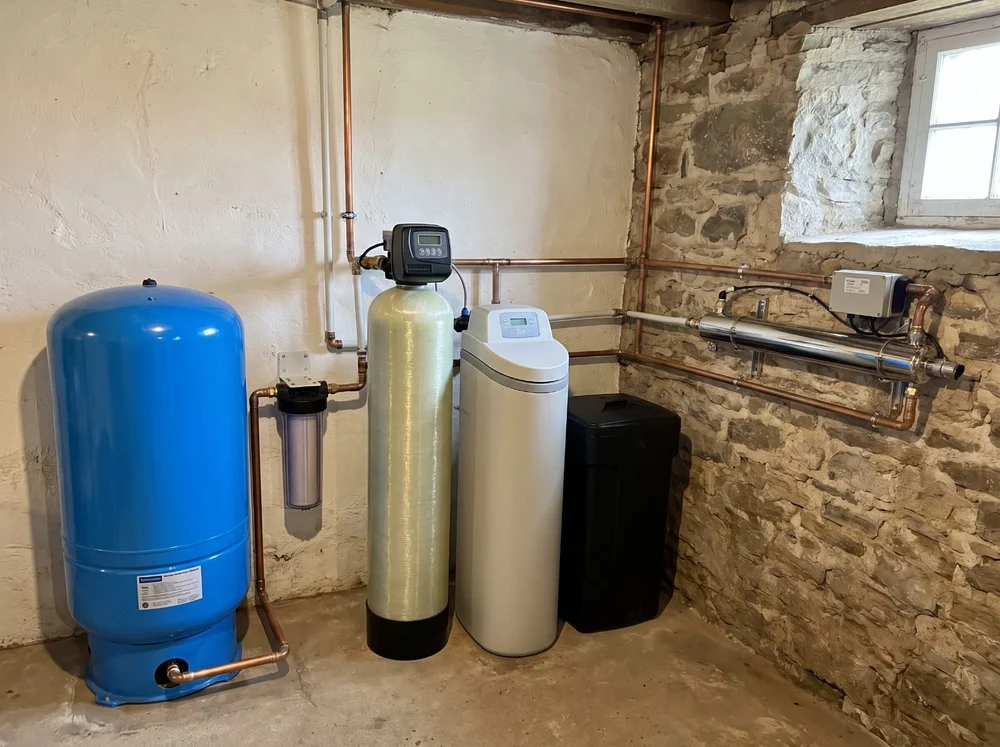
A warning sign
Penn State Extension says total coliform bacteria live in soil and surface water and are mostly harmless themselves. Finding them means surface water or debris is getting into your well, so harmful germs could too.
Take it seriously
E. coli comes from the intestines of people and animals. Penn State Extension says a positive E. coli result is much more serious than coliform alone, because it means sewage or animal waste is reaching your water. Use boiled or bottled water until it's fixed.
Bacteria in local wells
| Survey | Coliform | E. coli |
|---|---|---|
| Penn State survey of 450 Pennsylvania private wells | about 35% | about 15% |
| Berks County samples, Penn State lab (2007 to 2025) | 40.2% failed | 7.8% failed |
| Lancaster County samples, Penn State lab (2007 to 2025) | 41.5% failed | 10.3% failed |
County figures are samples homeowners chose to send in, not random surveys.
Step by step, per Penn State Extension
Find how it gets in
Check for a loose or missing well cap, cracks in the casing, and surface water pooling or draining toward the well. A tight sanitary cap keeps out insects and runoff.
Shock chlorinate
Disinfect the well and plumbing, bypassing any treatment equipment first. PA DEP publishes step-by-step instructions.
Retest
Test again 10 to 14 days later. If it's clean, test once more 2 to 3 months later.
Add continuous disinfection if it returns
If bacteria come back, UV light or chlorination treats every gallon as it enters the house.
UV light or chlorination
| Option | How it works | Things to know |
|---|---|---|
| UV disinfection | A UV lamp kills bacteria as water flows past it. No chemicals. | Water must be clear, so a sediment filter usually goes first. Lamp replaced about yearly. Penn State Extension doesn't recommend UV for very high counts (over 1,000 total coliform per 100 mL). $1,395 installed. |
| Chlorination | A feed pump adds chlorine, with about 30 minutes of contact time. | Leaves a protective residual of 0.3 to 0.5 mg/L. Needs a sediment filter and regular upkeep. Quoted after a water test. |
How Willow Springs helps
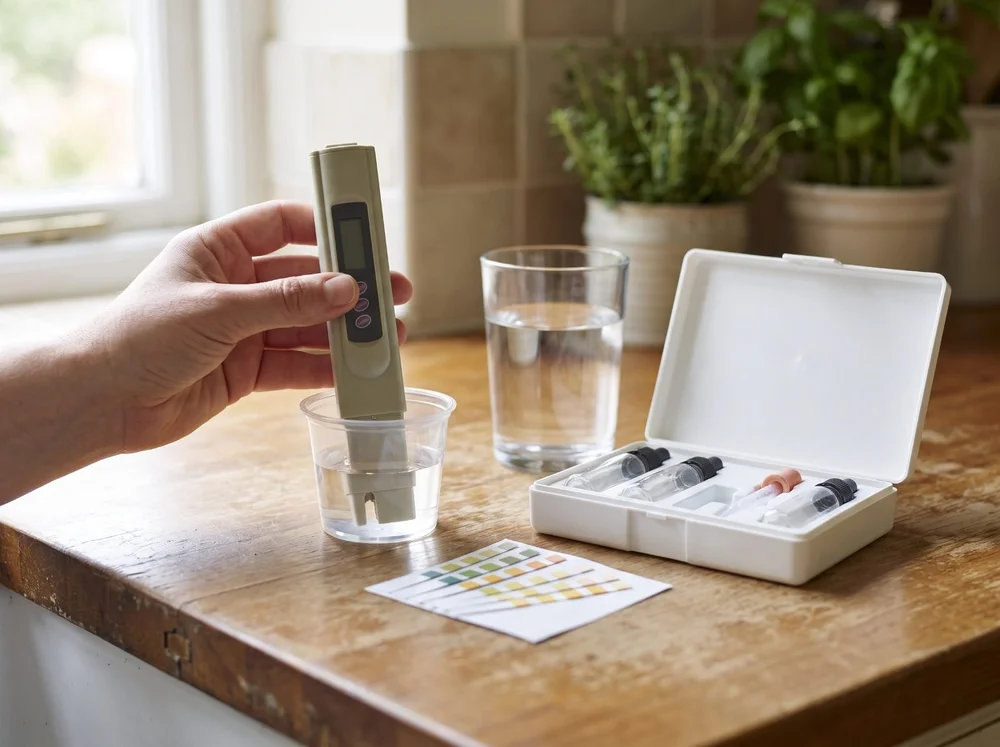
Bacteria need a certified lab test, and we'll help you arrange one. Then we test hardness, iron, pH and TDS for free at your sink, because those decide what has to go in ahead of a UV light, and give you a clear price.
Bacteria in well water: common questions
What does a positive coliform test mean?
Penn State Extension says total coliform bacteria are common in soil and surface water and are mostly harmless themselves, but they are an indicator: they show that surface water or other contamination is getting into your well. A positive E. coli result is much more serious, because it means sewage or animal waste is reaching the water.
How common is bacteria in Pennsylvania wells?
Common. Penn State Extension says a survey of 450 private Pennsylvania wells found coliform bacteria in about 35% and E. coli in about 15%. In Penn State's lab summary of Berks County samples, 40.2% failed for total coliform and 7.8% for E. coli.
What should I do if my well tests positive?
Penn State Extension recommends finding and fixing how the bacteria get in (a loose well cap, a damaged casing, surface water draining toward the well) and shock chlorinating the well. Retest 10 to 14 days later, and again in 2 to 3 months if the first retest is clean. If bacteria come back, install continuous disinfection.
Does shock chlorination fix it for good?
Not always. If the source of contamination isn't fixed, bacteria often return. Penn State Extension says continuous disinfection, usually UV light or chlorination, is the answer when they do.
How does UV disinfection work?
Water passes a UV lamp that kills bacteria without adding chemicals. Penn State Extension says the water must be clear and free of sediment, so a sediment filter usually goes in first, and the bulb is replaced about once a year. UV disinfection installed by Willow Springs is $1,395.
Can I drink the water while I wait?
For emergencies, Penn State Extension says boiling water for about one minute kills bacteria. Until your well tests clean, use boiled or bottled water for drinking, cooking and brushing teeth.
Written by Sam Beiler, co-founder of Willow Springs Water Company, Sinking Spring, PA. Last updated October 2026.
- Penn State Extension, Coliform Bacteria
- Penn State Extension, Shock Chlorination of Wells and Springs
- PA DEP, Disinfection of Home Wells and Springs
- Penn State Extension, Private Water Systems FAQs
- Penn State Agricultural Analytical Services Lab, Berks County drinking water test summary
- Penn State Agricultural Analytical Services Lab, Lancaster County drinking water test summary