
Well water testing in Berks County, PA
Pennsylvania doesn't require private wells to be tested, so nobody checks your water but you. Penn State Extension says about half of the state's private water supplies fail at least one drinking water standard. We test your well water free at your kitchen sink and help you arrange a certified lab test for bacteria and other health concerns.
Not sure what you need? Get your free water report in seconds →
Local well test results
Penn State's Agricultural Analytical Services Lab summarizes the samples Berks County homeowners send in. These aren't a random survey, but they show what local wells commonly fail.
| Berks County well samples (Penn State lab, 2007 to 2025) | Failed the standard |
|---|---|
| Total coliform bacteria | 40.2% |
| Corrosivity index | 76.8% |
| pH (acidic or high) | 18.5% |
| Manganese | 13.4% |
| Iron | 10.9% |
| First-draw lead | 8.2% |
| E. coli | 7.8% |
| Nitrate | 7.5% |
| Arsenic | 6.5% |
464 samples, 9/12/2007 to 6/16/2025. Source: Penn State AASL Berks County summary.
What that tells you
Bacteria is the big one. Four in ten Berks samples failed for total coliform. It has no taste or smell, so only a lab test finds it.
Corrosive water is common. Corrosive or acidic water can pull copper and lead from plumbing, which is why first-draw lead fails too.
Iron and manganese are nuisances. Stains and taste, not usually health issues, but they decide which treatment you need.
Penn State Extension's well testing schedule
| When | Test for |
|---|---|
| Every year | Total coliform and E. coli bacteria |
| Every three years | pH and total dissolved solids |
| Every three years, if there's a septic system nearby | Nitrate and bacteria |
| Every three years, near farm fields | Nitrate and pesticides |
| Every three years, near salted roads | Sodium and chloride |
| Every three years, near gas drilling | Chloride and barium (test before drilling starts too) |
| Every three years, near mining | Iron, manganese, sulfate and aluminum |
| Any time | Stains, tastes or odors appear, or after flooding |
Source: Penn State Extension, Testing Your Drinking Water (updated June 2025).
Free in-home test, plus help with the lab test
Our in-home water test
Hardness for scale and softener sizing
Iron and manganese for stains
pH for acidic, corrosive water
Chlorine if you also have city water or chlorinate your well
Total dissolved solids for overall mineral content
We explain every number before we recommend anything. No cost and no obligation.
Bacteria, nitrate, lead and more
Health-related tests need a lab accredited by the Pennsylvania DEP. Penn State Extension says a bacteria test usually costs $20 to $40. We'll tell you which tests make sense for your well and help you get the sample to a certified lab.
Buying or selling a home with a well? Test early so there's time to treat before closing.
Well water testing: common questions
How often should I test my well water?
Penn State Extension recommends testing every year for total coliform and E. coli bacteria, and testing pH and total dissolved solids every three years. Add other tests based on what's near your well, and test right away if the water changes in taste, smell or color.
Is well testing required in Pennsylvania?
No. Penn State Extension says there are no state regulations requiring private well owners to test their drinking water or maintain their well, and no statewide construction standards for private wells. That makes testing the owner's job.
What does your free water test cover?
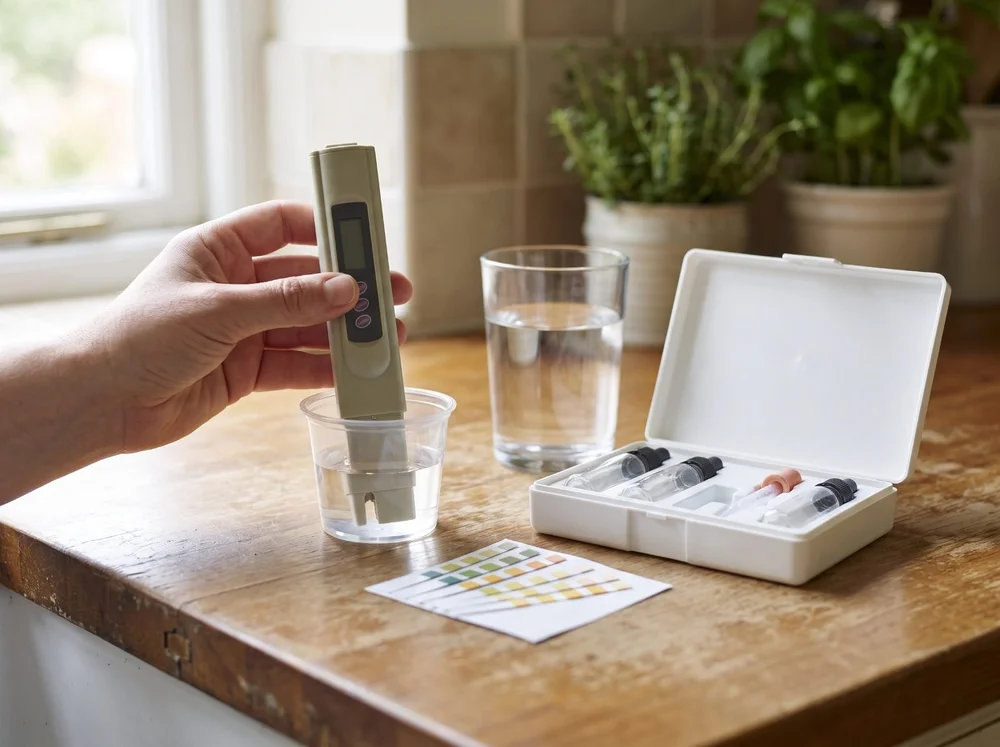
Our free in-home test checks hardness, iron, manganese, pH, chlorine and total dissolved solids at your kitchen sink, and we explain the results on the spot. It's a screening test to guide treatment.
Do I need a certified lab test?
For bacteria, nitrate, lead and anything health-related, yes. Penn State Extension recommends a lab accredited by the Pennsylvania DEP and cautions against relying on results from uncertified labs or water treatment salespeople for those tests. We'll help you arrange one.
How much does a well water test cost?
Penn State Extension says a bacteria test usually costs $20 to $40, and individual tests range from a few dollars to over $100. Our in-home screening test for hardness, iron, manganese, pH, chlorine and TDS is free.
What should I do after a flood?
Penn State Extension says not to use the water until testing shows it is safe. Test for coliform bacteria, E. coli and nitrate at a certified lab, shock-chlorinate the well, then retest.
Written by Sam Beiler, co-founder of Willow Springs Water Company, Sinking Spring, PA. Last updated October 2026.
- Penn State Extension, Testing Your Drinking Water
- Penn State Extension, Private Water Systems FAQs
- Penn State Extension, Best Management Practices for Private Water Wells
- Penn State Extension, Post-Flood Drinking Water Safety for Private Water Systems
- Penn State Agricultural Analytical Services Lab, Berks County drinking water test summary