
Orange or brown stains from your water? Here's what causes them
Orange, rust or reddish-brown stains in sinks, tubs and toilets almost always mean iron in your water. The EPA sets a guideline of 0.3 mg/L for iron, and stains show up above that level. Iron isn't a health risk, but it's fixable, and the right fix depends on how much iron you have, what form it's in and your water's pH.
Not sure what you need? Get your free water report in seconds →
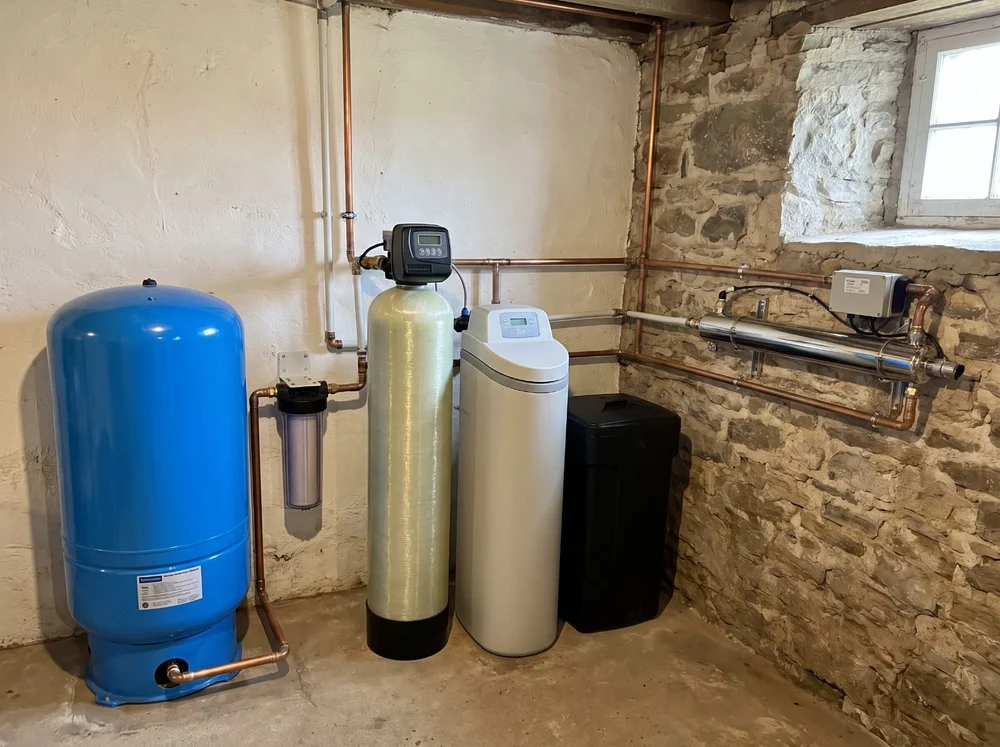
Signs you have iron or manganese
Orange or reddish-brown stains on fixtures, tubs, toilets and laundry. Iron above 0.3 mg/L.
Water that turns orange after it sits in a glass, or comes out cloudy and orange.
Metallic taste in drinking water, coffee and tea.
Black stains or black specks. Usually manganese, which stains above 0.05 mg/L.
Orange slime in the toilet tank, or a swampy, musty smell. That points to iron bacteria.
Is it a problem near Reading?
Yes. In Penn State's lab summary of 464 Berks County water samples (2007 to 2025), 10.9% failed for iron and 13.4% failed for manganese. Statewide, a Penn State survey found excessive iron in 17% of private water supplies.
Iron and manganese come from the rock and soil your well water passes through. That's why two wells on the same road can test very differently.
Iron treatment options, by test result
Penn State Extension matches the treatment to the test result. This is a summary of their guidance. Your test numbers decide which one fits.
| Treatment | When it fits (Penn State Extension) | Notes |
|---|---|---|
| Water softener | Dissolved iron below 5 mg/L and pH above 6.7 | Also fixes hard water. Oxidized (already orange) iron fouls the resin. |
| Oxidizing filter (greensand) | Combined iron and manganese of 3 to 10 mg/L | Removes both iron and manganese. |
| Birm filter | pH of at least 6.8 for iron (7.5 for manganese) | Low-maintenance where the pH is right. |
| Chlorination plus filtration | Combined iron and manganese over 10 mg/L | Also treats iron bacteria. |
| Polyphosphate feed | Iron below 2 mg/L | Hides the iron rather than removing it. Doesn't work for manganese. |
| Shock chlorination | Iron bacteria (orange slime, musty smell) | First step for bacteria. If needed more than every six months, consider continuous chlorination. |
If your water is also acidic (low pH), it often needs an acid neutralizer before the iron filter. We test pH as part of every free water test.
How Willow Springs fixes iron stains
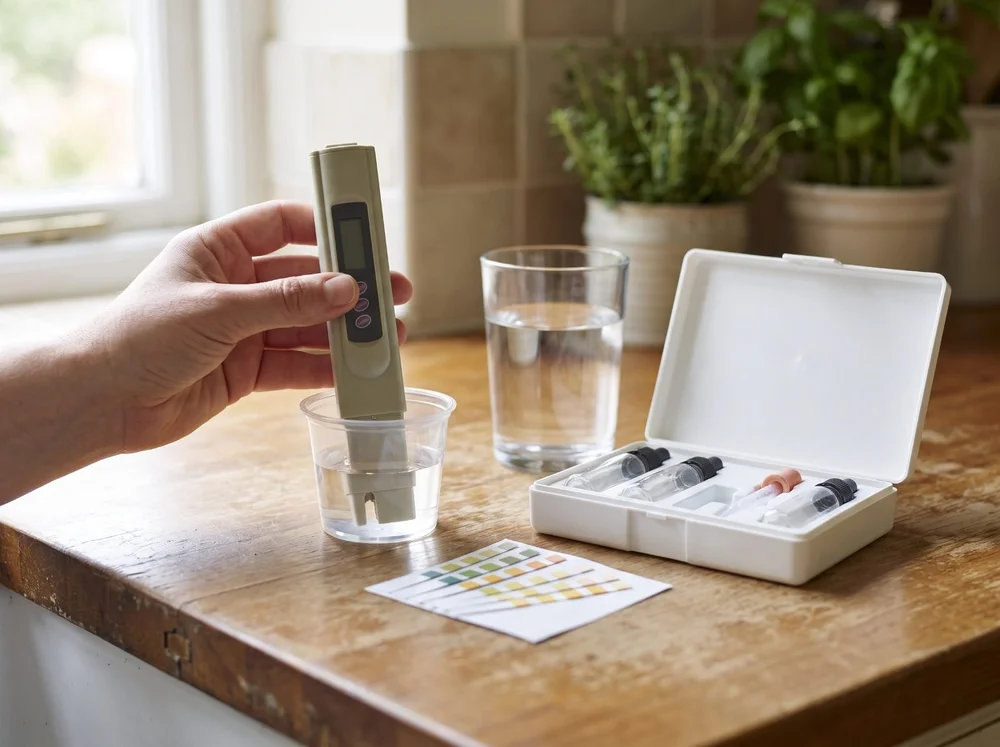
We test your water at your kitchen sink for iron, manganese, pH, hardness and TDS, free. Then we recommend the setup that fits your numbers, give you a clear price, and install it. If you suspect bacteria, we'll help you arrange a certified lab test.
Iron in well water: common questions
Is iron in well water dangerous?
Penn State Extension says iron and manganese are not health concerns in drinking water. They are nuisance problems: stains, metallic taste and clogged fixtures. The EPA does have a manganese health advisory of 0.3 mg/L, so it's worth knowing your manganese level.
Why are my toilet tank and fixtures orange?
Orange or reddish-brown staining is the classic sign of iron above the EPA's 0.3 mg/L guideline. Orange, slimy strands inside the toilet tank point to iron bacteria.
Will a water softener remove iron?
Sometimes. Penn State Extension says a softener can remove dissolved iron when the pH is above 6.7 and iron is below 5 mg/L. Iron that has already oxidized (orange water from the tap) fouls the softener resin and needs a filter.
What are the black stains?
Usually manganese, which leaves a dense black stain. The EPA guideline for manganese is 0.05 mg/L.
How do I know which system I need?
Test first. We measure iron, manganese, pH, hardness and TDS for free at your sink. Penn State's treatment guidance is based on those numbers, and so is our recommendation.
Written by Sam Beiler, co-founder of Willow Springs Water Company, Sinking Spring, PA. Last updated October 2026.