
Water softener not working? Start here
Hard water back? Spots on dishes again, or salt that never goes down? Most softener problems come down to a few causes: a salt bridge, a wrong setting, a bypass valve, a stuck brine float or worn-out resin. This guide walks you through the checks you can do yourself. We service the softeners we install, and if your old one is done, we'll replace it.
Not sure what you need? Get your free water report in seconds →
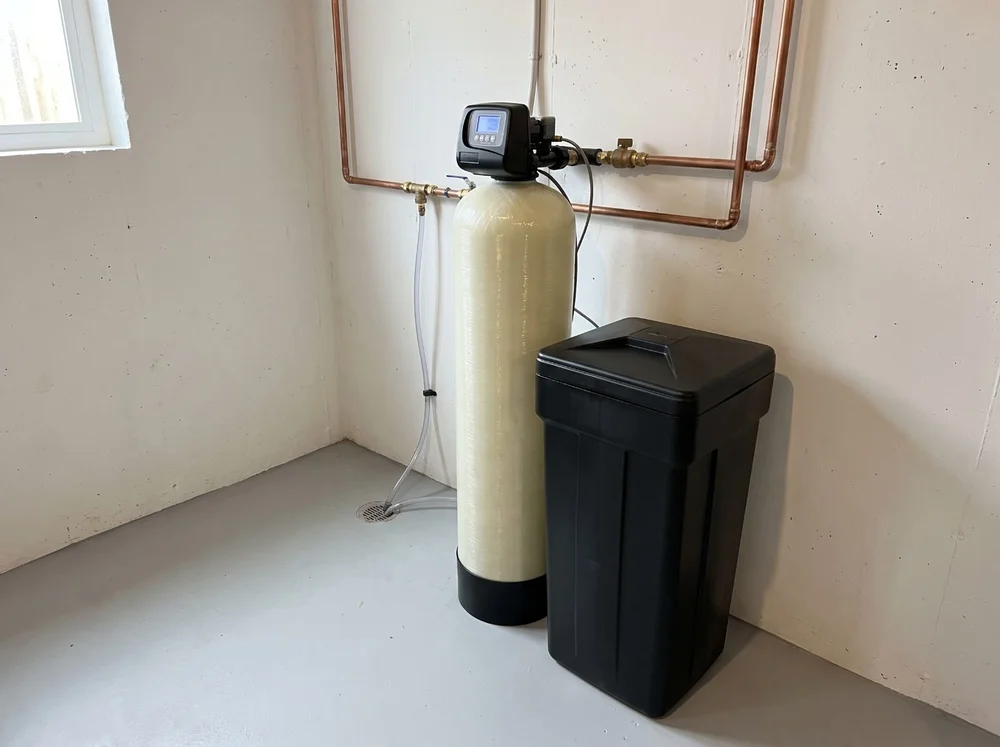
Signs your softener needs attention
Spots and scale are back on dishes, glass shower doors and faucets.
Soap won't lather and skin or hair feels dry or sticky again.
Salt level never drops, or the tank empties much faster than usual.
Standing water well above the normal few inches in the brine tank.
Orange or brown resin beads or stains, a sign iron is fouling the resin.
Error codes, a blank display or a unit that runs constantly.
Check these three things first
1. Salt. Is there salt in the brine tank? Diamond Crystal recommends keeping it at least half full and checking monthly.
2. Salt bridge. Push a broom handle gently down through the salt. If it hits a hard crust with empty space below, that's a bridge. Break it up and refill.
3. Bypass valve. Make sure the bypass on the softener is set to service, not bypass. It's easy to bump during other plumbing work.
Still not soft after that? The problem is likely in the settings, the brine draw or the resin. The table below shows what usually fixes each one.
Common softener problems and what fixes them
These are the problems behind most softener failures, with what the manufacturers and extension services say about each.
| Problem | What's going on | The fix |
|---|---|---|
| Salt bridge | A hard crust forms above the water, so water can't reach the salt to make brine (Diamond Crystal). | Break up the crust, clean the tank, refill. Use a cleaner salt if it keeps happening. |
| Salt mushing | A soft layer of partly dissolved salt settles at the bottom and can clog the brine intake (Diamond Crystal). | Empty and clean the brine tank and brine line. |
| Wrong hardness or timer setting | Too low and the water isn't fully softened; too high and the unit wastes salt and water (Diamond Crystal, UNL Extension). | Test the incoming hardness and reprogram the control valve to match. |
| Brine valve or float problem | Too much or too little water in the brine tank. UNL Extension recommends cleaning and inspecting the brine valve and float at least once a year. | Clean or replace the brine valve, float and line. |
| Iron-fouled resin | Iron isn't fully removed by regeneration and builds up, cutting capacity (Purolite, UNL Extension). | Clean the resin with a resin cleaner, or add iron pretreatment if iron is high. |
| Worn-out resin | Resin can last over ten years, but chlorine shortens it (Purolite). | Replace the resin bed or the softener. A carbon filter ahead of the softener protects resin on chlorinated city water. |
| Control valve failure | Seals, pistons or motors wear out, causing leaks, constant draining or no regeneration. | Rebuild or replace the valve, or replace the unit if it's old. |
Service on the softeners we install
We know your system. We installed it, sized it to your water and keep its settings on file.
Call or text first. Many problems are a salt bridge or bypass we can walk you through by phone.
If it needs a visit, we check the brine tank, float, injector, valve settings and resin, then test the softened water to show it's working.
We'll replace it, not patch it
We don't repair other companies' softeners. If yours has stopped working, we'll test your water for free and quote a new softener sized to your hardness and household. A softener installed by us starts at $2,295, or about $49 a month with approved financing.
Water softener problems: common questions
Why is my water softener not softening?
The most common causes are an empty brine tank, a salt bridge (a hard crust of salt above the water that stops brine from forming), a bypass valve left in bypass, a hardness or timer setting that is wrong, or resin that iron has fouled. Check the salt and the bypass first; if those are fine, the unit needs a service check.
How do I fix a salt bridge?
A salt bridge is a hard crust of salt that forms above the water level in the brine tank. Gently break it up with a broom handle, scoop out the loose chunks, and refill with fresh salt. Diamond Crystal recommends keeping the tank at least half full and checking it at least once a month.
How much water should be in my brine tank?
Morton says 2 to 5 inches of water at the bottom of the tank is typical. Much more than that can point to a stuck float, a clogged brine line or a control valve problem.
How long does softener resin last?
Purolite, a resin manufacturer, says premium resin can last over ten years. Chlorine and iron shorten that. Purolite says each 1 ppm of chlorine in the water cuts resin life by 50%, and iron that isn't removed reduces capacity over time.
Is my softener using too much salt?
Diamond Crystal says most homes use about two 40-pound bags every one to three months. Using salt much faster than that often means the hardness setting is too high or the unit is regenerating too often, so the settings should be checked.
Do you repair softeners from other companies?
No. We service the systems we install, so we can stand behind the work. If your current softener has stopped working, we'll test your water for free and quote a replacement sized to your water. A new softener installed by us starts at $2,295.
Written by Sam Beiler, co-founder of Willow Springs Water Company, Sinking Spring, PA. Last updated October 2026.
- Diamond Crystal, Water Softener Salt FAQs
- Diamond Crystal, What is salt mushing in water softeners?
- Morton Salt, Water Softener FAQ
- Purolite, Factors that affect softening resin performance and life
- University of Nebraska-Lincoln Extension, Drinking Water Treatment: Water Softening (G1491)
- Penn State Extension, Water Softening